
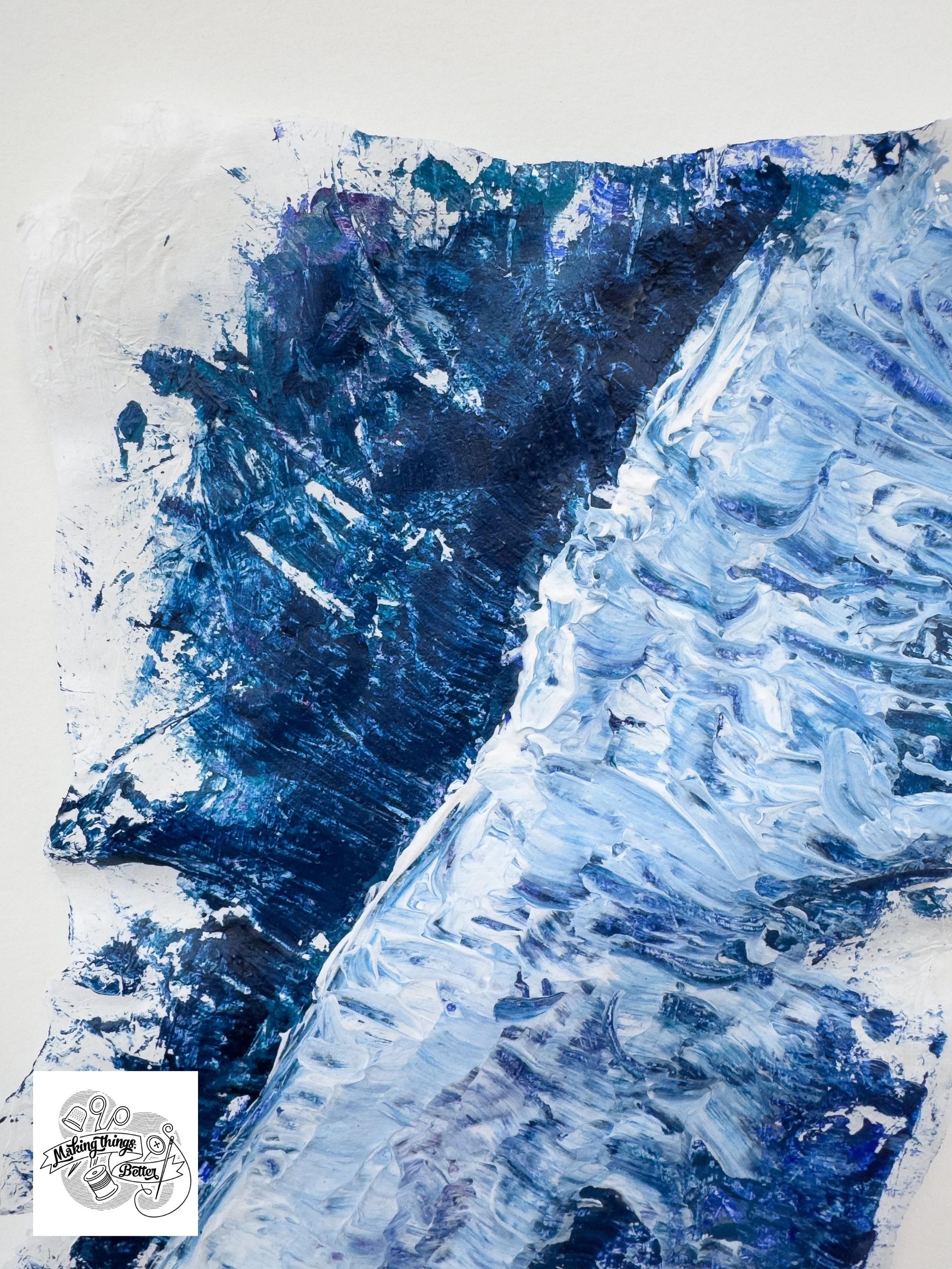
Plastici-SEA: Rolling Tides (Disrupted Placidity)
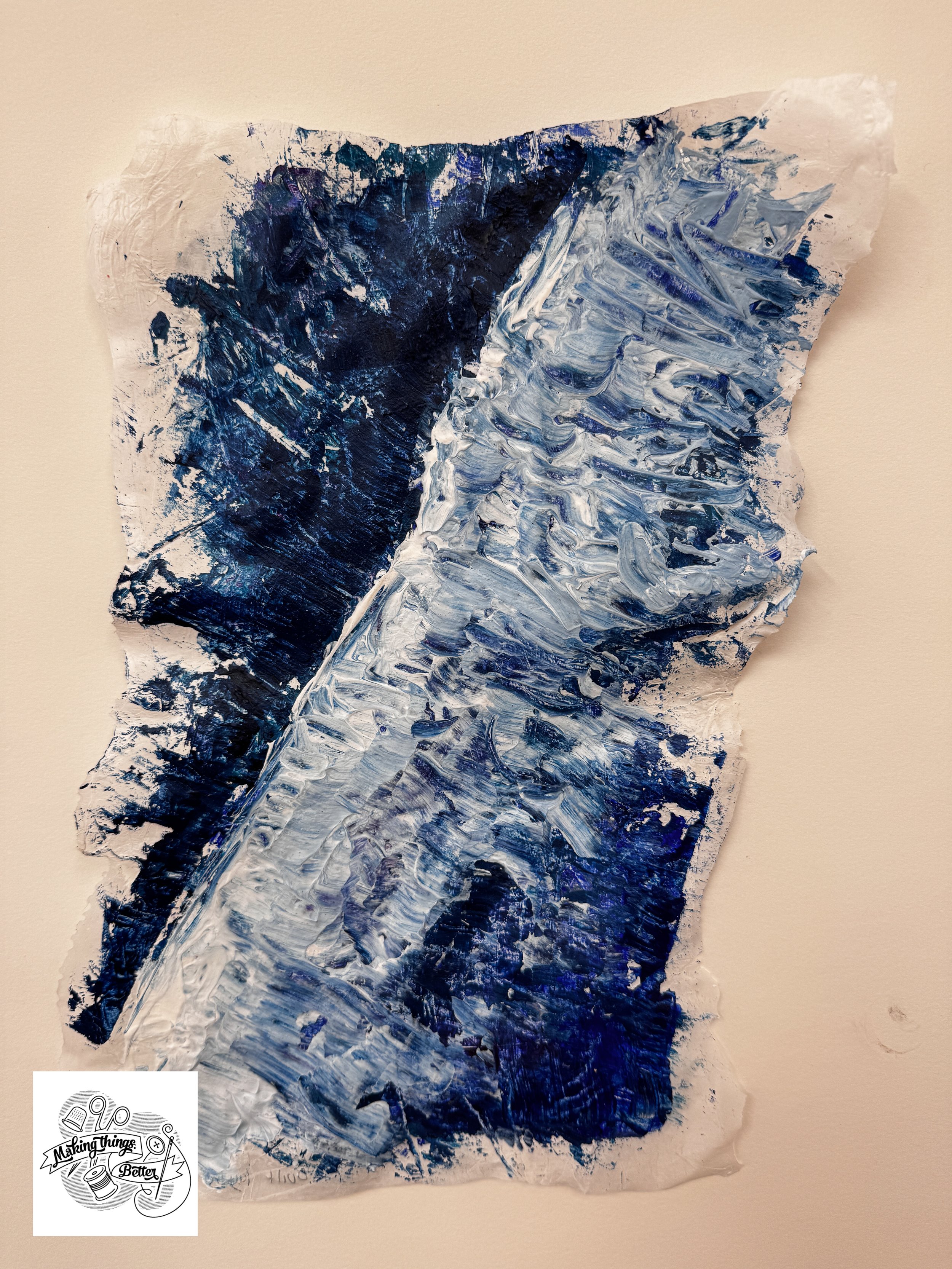
There is an energy that enters the studio when you stop trying to control every mark and instead let the paint take over.
In this piece (measuring 8.5 in × 12.5) on a raw, fused plastic canvas, I wanted to explore the sheer kinetic force of rolling tides: that moment when heavy, crashing waves swell and break into calm, placid waters.
This work grew directly out of one of my small 4.5 in×3.5 in ocean studies, scaling up the composition to test how acrylic mediums and salvaged paints respond to recycled fused plastic. Working with a limited palette of three colours, I set aside traditional brushes entirely.
Instead, the surface was built up using discarded credit cards and stiff cardboard offcuts, creating heavy ridges, dragging thick paint diagonally across the plastic created a dramatic, cresting wave that cuts straight through the composition. Beyond adding paint, I spent time scratching and scraping back into the surface with the corners of the cards. Carving away layers revealed the darker indigo fields and the raw plastic beneath.
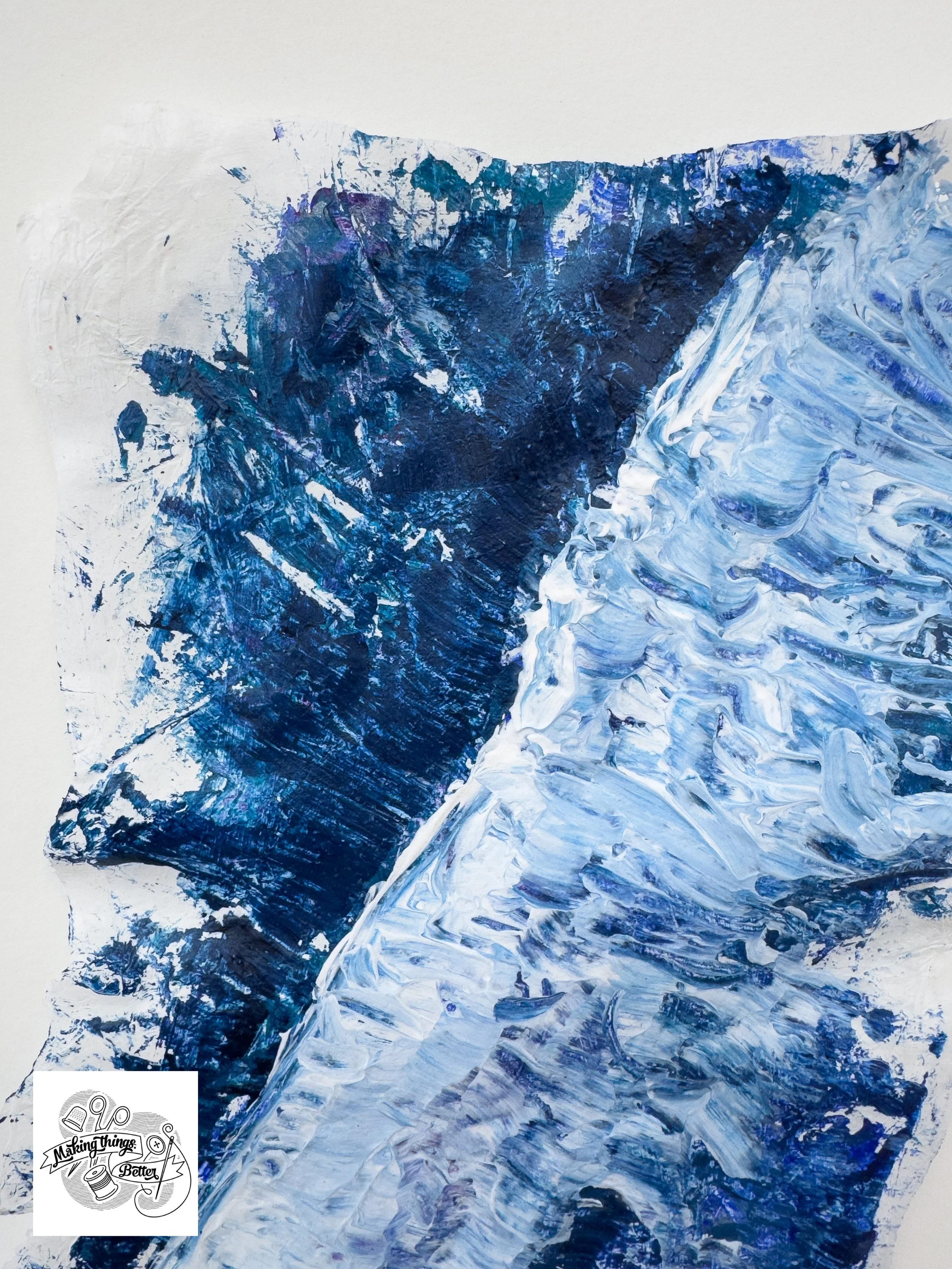
Working experiment-first means accepting what the materials reveal..the mid-tone blue has a chalkiness, but as the paint set, the sculptural presence of the scraped ridges took over.
The act of scratching back into the wet surface mirrored the wider story running through this body of work—the feeling of unseen forces circling beneath a quiet surface and forcing you to react.
To honor the physical reality of the fused plastic, Plastici-SEA: Rolling Tides is presented in its completely unrefined state. It isn't trimmed into a neat rectangle, nor is it trapped behind glass in a traditional frame.
Mounted using a hidden magnet system, the artwork floats just off the wall, letting its torn, deckled edges cast soft, natural shadows. It stands as a testament to disrupted placidity—a reminder that when rolling tides crash into quiet waters, we find our strength not by resisting the wave, but by riding its energy.
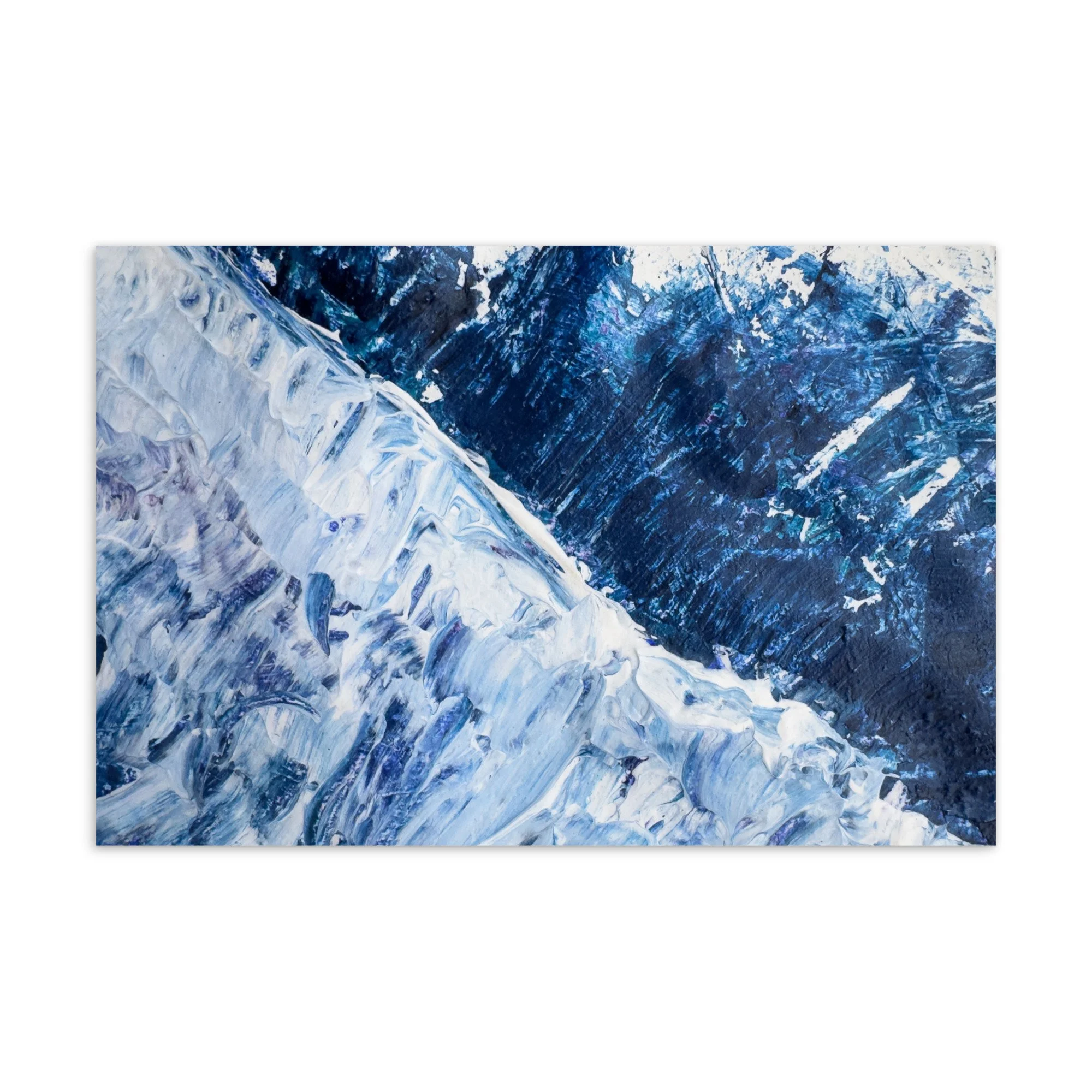
• Cardboard paper
• Paper weight: 7.67–10.32 oz/yd² (260–350 g/m²)
• Size: 4″ × 6″ (101 × 152 mm)
• Paper thickness: 0.013″ (0.34 mm)
• Coated outer surface
• Blank product materials sourced from Sweden, US, Brazil, or China